
From Equipment to Experts: How We Ensure the Precision of Every Mold
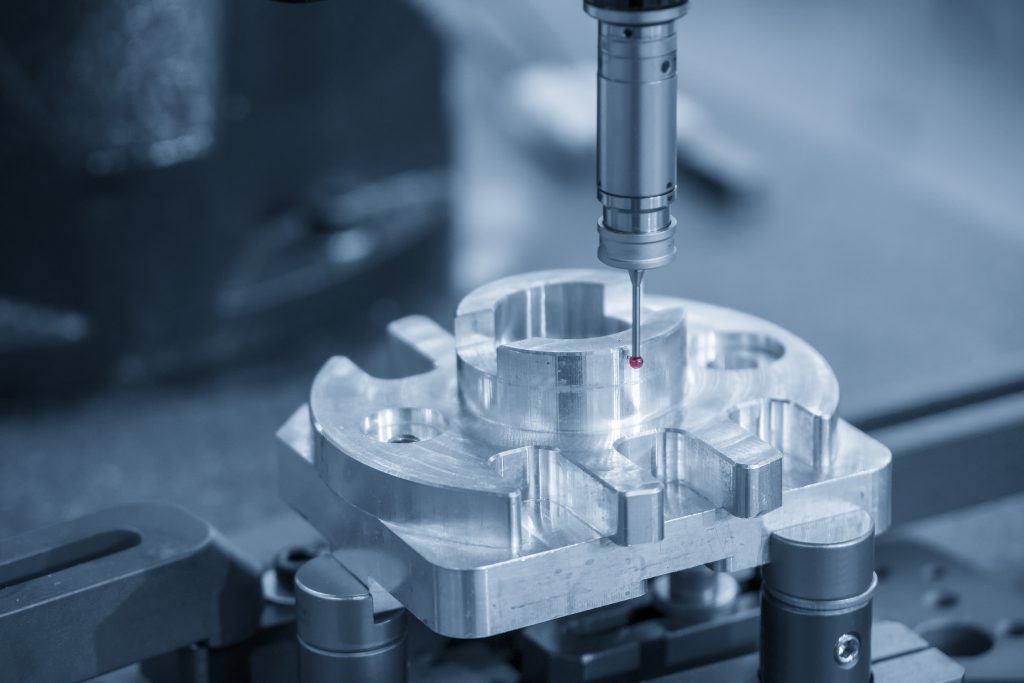
In the manufacturing industry, mold precision is the “lifeline” of product quality. Whether it’s the tight fit of automotive components, the tiny dimensions of electronic parts, or the smooth curves of home appliance casings—every perfect detail relies on millimetric, even micrometric, precision control in molds. As a professional mold factory with over a decade of experience in the industry, we have always made “precision first” our core standard. From importing cutting-edge equipment and leveraging expert oversight to implementing end-to-end refined management, we’ve built a full-chain precision assurance system covering “equipment, processes, personnel, and inspection.” Today, we’ll break down the core logic of this system, so you can understand the expertise and rigor behind every mold that leaves our factory.
1. Precision Equipment: The Hardware Foundation of Accuracy
Achieving mold precision starts with reliable, high-precision equipment. We know that even the most experienced technicians need dependable tools to turn “digital precision” on design drawings into “physical precision” in actual molds. That’s why we consistently invest millions in upgrading our equipment lineup, building comprehensive precision production capabilities from mold machining to surface finishing:
1.1 Machining Equipment: Micrometric Control, No Room for Millimetric Errors
- CNC Machining Centers: We’ve imported 5-axis CNC machining centers from leading global brands like Germany’s DMG MORI and Japan’s FANUC. These machines boast a positioning accuracy of ±0.003mm and repeatability of ±0.001mm. Whether it’s complex mold cavities, irregular sliders, tiny holes, or slot widths, computer programs precisely control tool paths—eliminating human-operated errors and ensuring every machined surface meets design standards for dimension and smoothness.
- EDM Machines: For hard-to-machine structures like deep cavities and narrow gaps (which can’t be easily processed via cutting), we use EDM (Electrical Discharge Machining) equipment from Japan’s Sodick. This “non-contact machining” method uses electrical discharges to shape parts, achieving an accuracy of ±0.002mm. It also minimizes machining stress on mold materials, preventing precision deformation caused by stress release during later use.
- Wire EDM Machines: Equipped with slow-wire EDM machines from Switzerland’s AgieCharmilles, we achieve a cutting accuracy of ±0.001mm and a surface roughness of Ra ≤ 0.2μm. These machines are ideal for key components like mold cutting edges and precision inserts, ensuring stable cutting or molding performance during long-term use.
1.2 Measurement Equipment: “Inspect Before Delivery” to Visualize Precision
“Machining precision” needs “inspection precision” to verify. We’ve set up an independent precision measurement room in our workshop, equipped with multiple high-accuracy measuring tools to conduct “full-dimensional inspections” at every stage of mold machining:
- Coordinate Measuring Machines (CMMs): Using Zeiss (Germany) CMMs with a measuring range of 0–2000mm, we achieve an accuracy of (0.8 + L/1000) μm (where L is the measuring length). These machines comprehensively inspect 3D dimensions and geometric tolerances (e.g., flatness, perpendicularity, coaxiality) of molds, generating detailed reports to ensure every parameter aligns with design drawings.
- 2D Vision Measuring Systems: For 2D dimensions (e.g., hole diameters, distances, angles), we use Keyence (Japan) vision measuring systems. High-definition cameras capture part images, and software automatically analyzes dimensions—delivering an accuracy of ±0.0005mm. This is 10x more efficient than traditional caliper measurements and eliminates human reading errors.
- Hardness Testers & Roughness Meters: Beyond dimensional precision, mold surface hardness and roughness directly impact service life and product quality. We use Rockwell hardness testers to ensure mold materials reach a hardness of HRC 50–55. Roughness meters verify that mold cavity surfaces meet Ra ≤ 0.4μm—critical for scratch-free products and easy demolding.
2. Expert Team: The “Software Core” of Precision Control
If equipment is the “hardware foundation” of precision, our expert team is the “software core.” Mold machining isn’t just about “automated equipment operation”; design optimization, process selection, and problem-solving all require the experience and technical judgment of senior technicians. Our team brings together experts with an average of 15+ years in the industry, safeguarding mold precision in three key ways:
2.1 Design Phase: “Prevent Errors” Is Better Than “Correct Errors”
A mold’s precision is determined from the design stage. Our mold designers have dual backgrounds in mechanical design and materials science, and they fully consider:
- Material Shrinkage: Based on your product’s material (e.g., PP, ABS, PC), we accurately calculate molding shrinkage rates (typically 0.5%–2%) and “compensate” for this shrinkage in mold design. This prevents dimensional deviations in the final product caused by material shrinkage.
- Mold Structure Optimization: For complex molds (e.g., multi-cavity molds, core-pulling molds), designers use 3D simulation software (e.g., UG, SolidWorks) to simulate mold opening/closing and melt flow paths. They optimize gate positions and vent sizes to avoid uneven molding or dimensional errors from poor structural design.
- Process Parameter Presets: Designers preset reasonable process parameters (e.g., CNC machining speeds, EDM discharge parameters, injection temperature/pressure) based on mold structure and product requirements. This reduces precision correction costs during later debugging.
2.2 Machining Phase: “On-Site Oversight” to Catch Every Detail
During mold machining, we implement a dual-supervision system: “mentor-apprentice guidance + expert inspections”:
- Senior Technicians Lead Machining: Each precision machine is operated by technicians with 5+ years of experience. They understand the “personality” of each device—for example, how cutting parameters vary for materials like S136, H13, or 718H. They fine-tune parameters based on actual machining conditions to maintain stable precision.
- Daily Expert Inspections: We have dedicated process experts who conduct at least 3 inspections of each machining station daily. Comparing against design drawings and process documents, they spot-check key mold dimensions and resolve potential issues (e.g., dimensional deviations from tool wear, deformation from improper clamping) in time.
2.3 Mold Testing Phase: “Iterative Optimization” to Get Closer to Perfection
Mold testing is the “final test” of precision and a key stage for optimization. Our mold testing experts:
- Track the Entire Testing Process: In the testing workshop, experts record process parameters (temperature, pressure, holding time) and product inspection data (dimensions, appearance, weight) for each test. They analyze the causes of product deviations—for example, if a part is too small, it may be due to undersized mold cavities or insufficient injection pressure.
- Precisely Correct Errors: For precision issues found during testing, experts develop “minimal intervention” correction plans. If dimensional deviations are within 0.005mm, they adjust injection parameters; for larger deviations, they use EDM or CNC for local corrections—avoiding over-machining that could damage overall mold precision.
- Collaborate with Clients for Confirmation: After passing tests, we provide clients with detailed test reports (including product inspection data and mold precision reports) and invite them to on-site acceptance. We only move to mass production once clients fully approve the mold’s precision.
3. End-to-End Management: Precision Control at Every Step
Ensuring mold precision isn’t just about “doing one step well”—it requires standardized management from order receipt to mold delivery. We’ve implemented the ISO 9001 Quality Management System, embedding precision requirements into every process step to create a traceable, reviewable, and optimizable management loop:
3.1 Raw Material Control: Eliminate “Precision Risks” at the Source
We only use mold steels that meet international standards (e.g., S136, H13, 718H) and require suppliers to provide material certificates and inspection reports. Before raw materials are stored, we use spectrometers to test material composition—ensuring no impurities or composition deviations. Hardness testers verify that materials meet machining requirements, preventing unstable precision or mold cracking during later processing.
3.2 Standardized Production Processes: Every Step Has a “Precision Standard”
We create a custom “production process card” for every mold, specifying precision requirements, equipment models, operating standards, and inspection checkpoints for every step—from raw material cutting, rough machining, and finish machining to heat treatment and assembly. For example:
- After rough machining: Blank dimensional deviation ≤ 0.1mm;
- After heat treatment: Mold deformation ≤ 0.02mm;
- During assembly: Guide pillar and bushing fit clearance ≤ 0.005mm.
Inspection data for each checkpoint is recorded and archived, ensuring we can trace issues to specific steps and responsible personnel if problems arise.
3.3 Post-Delivery Support: Precision Assurance Doesn’t End at Delivery
We believe precision assurance shouldn’t stop when the mold is delivered. Instead, we continuously track how molds perform in our clients’ production lines. After delivery, we conduct regular follow-ups to understand mold precision and wear. We also offer free precision inspections and maintenance advice—such as repair plans for worn mold edges or polishing tips for cavity surfaces—ensuring stable precision throughout the mold’s service life.
3.4 Global Service Advantages for Overseas Clients
To better serve our overseas partners, we’ve optimized our global support:
- International Certification Compliance: All our molds meet standards like ISO, DIN (Germany), and ASTM (US), ensuring compatibility with global production lines.
- Fast Logistics & Customs Support: We partner with reliable logistics providers (e.g., DHL, FedEx) to ensure on-time delivery. Our team also assists with customs documentation (e.g., CE certificates, material declarations) to simplify import processes.
- 24/7 Technical Support: Our English-speaking engineering team provides 24/7 technical assistance via video calls, emails, or phone—resolving precision-related issues quickly, no matter your location.
Conclusion: Precision Is Our “Bottom-Line Commitment” to Clients
In the mold industry, “a tiny error can lead to huge mistakes.” A single precision deviation in a mold could result in scrapped products on your entire production line, causing significant financial losses. That’s why we’ve made “ensuring the precision of every mold” an unshakable bottom line—using cutting-edge equipment to build a solid hardware foundation, relying on expert teams to control technical details, and leveraging end-to-end management to mitigate risks.
From equipment to experts, from design to delivery, every effort we make serves one goal: to ensure every mold you receive perfectly matches your production needs and becomes a “reliable backbone” for your product quality. If you’re looking for a precision-focused, trustworthy mold partner, we welcome you to visit our factory anytime—so you can see firsthand how we use expertise and rigor to create every “high-precision mold.”